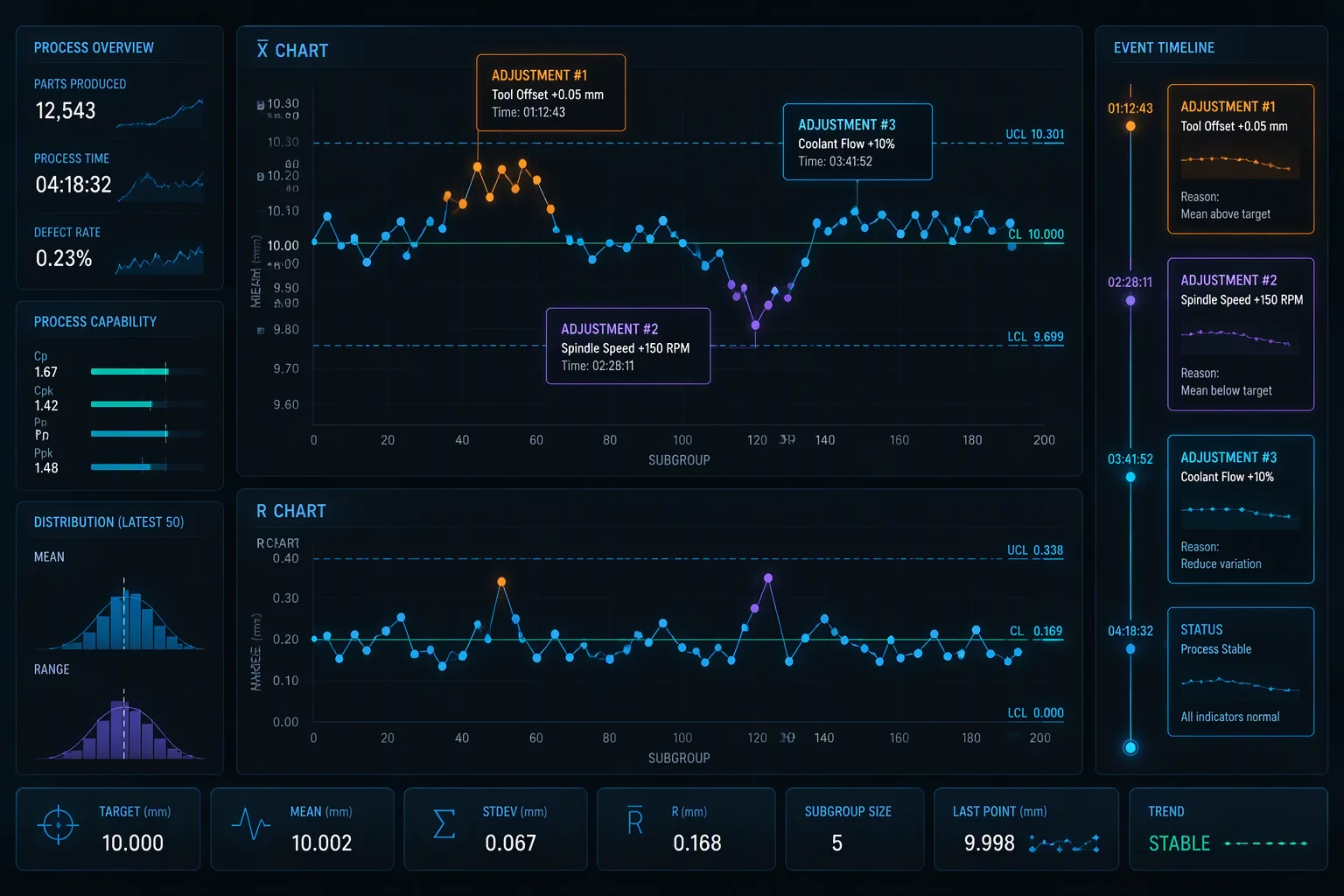
Why Measurement Values Alone Never Tell the Full Operational Story
Statistical software captures numerical coordinates with immaculate precision, yet a solitary coordinate cannot explain whether a sudden spike was triggered by raw material swap, equipment maintenance, or ambient temperature fluctuation. Context notes provide the narrative fabric that converts raw numbers into actionable engineering intelligence.
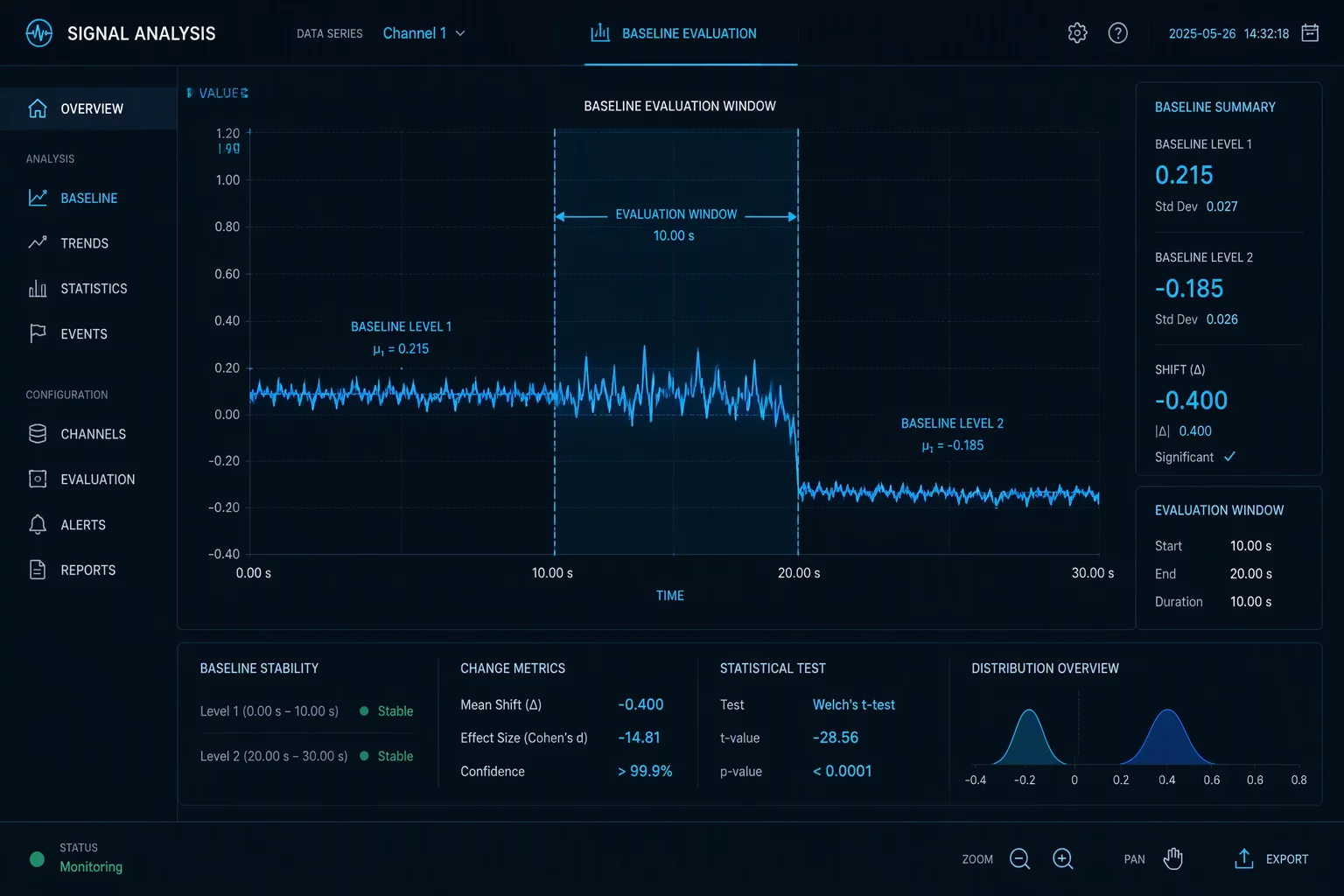
When operators record numbers on a run sheet without capturing corresponding environmental or mechanical events, retrospectively deciphering an unexpected shift becomes an exercise in speculation. A sequence of subgroup averages might reveal an abrupt upward step, but statistical tests cannot disclose whether an operator adjusted the tooling speed twenty minutes earlier.
- Tooling switchovers, lubrication cycles, and planned sensor recalibrations that introduce transient spikes.
- Environmental shifts such as warehouse humidity variations or ambient cooling tower thermal drops during evening runs.
- Raw material batch transitions and supplier changes that alter input viscosity or density without triggering automated alerts.
Quality teams frequently expend days attempting to mathematically model an anomaly that could have been clarified in thirty seconds had the floor technician jotted down a single line in the workstation logbook.
“A data point without a time-stamped context note is an unsolved mystery; pairing the coordinate with shift conditions transforms raw variation into systemic knowledge.”
Pitfalls of Separating Numeric Trends from Physical Workstation Events
Separating numerical data from floor observations creates structural blindness during root cause analysis. When engineers inspect a control chart weeks after a run concludes, they see clusters of points hovering near the upper control limit. In the absence of contemporaneous documentation, analysts frequently misdiagnose systematic setup adjustments as common-cause random noise, or conversely, mistake temporary setup tweaks for fundamental process drift.
Integrating structured log notes directly onto the control timeframe preserves vital operational memory. Documenting specific machine speed changes, feeder bin refills, or temporary conveyor halts ensures that retrospective audits evaluate variation within its actual physical framework rather than against hypothetical baseline assumptions.
Building a Unified Standard for Time-Stamped Floor Annotations
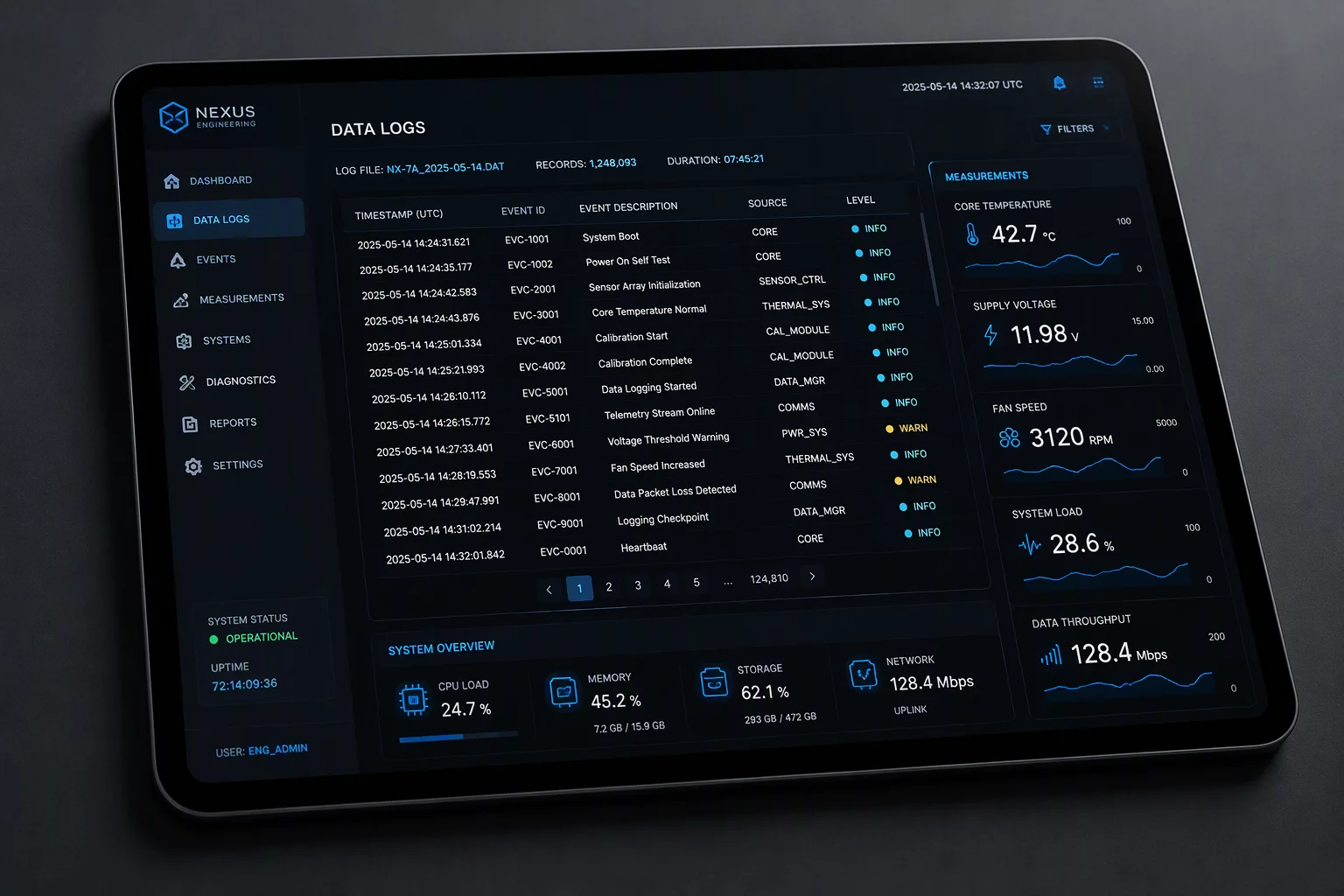
Establishing reliable process baselines requires engineering leadership to standardize documentation expectations across all operating shifts. Shift logs should capture concise, categorical parameters including batch code, machine setpoint revisions, technician initials, and maintenance pauses alongside every measurement cycle. This standardized syntax bridges the gap between quality analysts in the conference room and technicians on the shop floor.
When operational context notes are stored alongside subgroup metrics in centralized databases, statistical software can automatically overlay event flags onto control charts. Teams can instantly correlate unusual subgroup dispersion with physical line interruptions, accelerating problem resolution and preventing repeated false alarms during production monitoring.
Related Articles
Frequently Asked Questions
Technicians should systematically document batch identifiers, raw material lot numbers, tooling changes, feed adjustments, planned or unplanned machine stops, and technician handover times. Brief notes on ambient conditions or abnormal visual signs also provide essential context during subsequent review.
Context annotations immediately explain isolated special causes such as a momentary conveyor restart or a sample taken during machine warmup. Having this context documented prevents quality teams from prematurely recalibrating an otherwise stable process.
Standardized digital logs or structured run sheets with predetermined event categories work best. Pairing free-text descriptions with predefined category tags ensures notes remain easily searchable and directly linkable to time-stamped measurement files.
Key Analytical Takeaways
Statistical values record process output, but only contemporaneous context notes record the physical parameters, human adjustments, and mechanical events that produced those exact numbers.
Capturing setup adjustments and line stoppages in real time prevents engineering teams from guessing weeks later whether an outlier was a recording mistake or a physical shift.
Establishing consistent codes for mechanical events enables seamless integration between floor logs and automated statistical software, cutting diagnostic cycle times drastically.
Request Analytical Consultation
Inquire directly on statistical baseline validation and review specific parameters of this case.